Karolina — Animal Communicator

Based on the Five Domains of Animal Welfare

Do You Truly Know Your Pet?

A wellness self-assessment for every pet owner.

0 / 50 ticked
Book a session

Your guide · How it works

What this guide is — and how to use it

This is a science-backed self-assessment that helps you explore five key areas of your pet's life — through your eyes, and theirs.

Based on the Five Domains of Animal Welfare, it is designed to help you see your pet more completely: their nutrition, environment, health, behaviour, and emotional world.

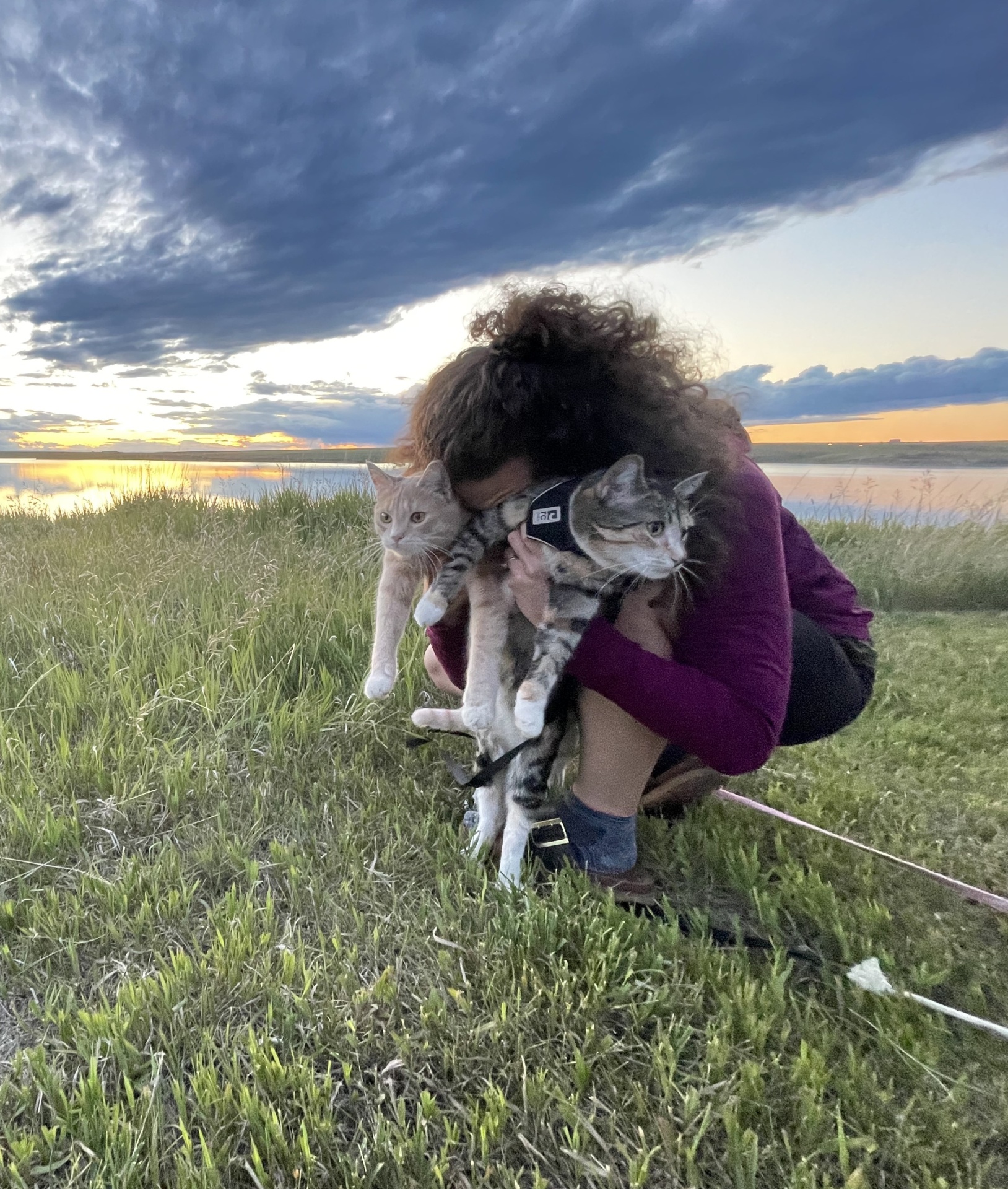
Created by Karolina — animal communicator and animal welfare researcher.

How to use this guide

  1. 1Work through each of the five domains and answer honestly.
  2. 2Tick the box ☐ for every statement that is genuinely true for you and your pet — each tick is one point.
  3. 3Read Why it matters, Signs to watch, and Quick wins inside each domain.
  4. 4Notice where you hesitate — that gap is often where your pet is waiting to be heard.
  5. 5When you've worked through each domain, press Reveal my score at the top of the page to see your total and what it means.

Framework

The Five Domains of Animal Welfare

1Nutrition

Food, water & digestion

What your pet eats and how their body uses it

2Environment

Home, safety & comfort

Space, agency, enrichment and sense of security

3Health

Body, pain & vitality

Physical wellbeing, pain signals and sensory health

4Behaviour

Actions, fears & needs

What your pet's behaviour is communicating

5Mental State

Emotions, joy & soul

The inner experience shaped by all other domains

The Fifth Domain — Mental State. Domains 1–4 all flow directly into your pet's emotional and inner experience. This is where everything connects.

First, tell us

Which animal are you here for?

All species share the Five Domains — but tips will feel most alive when you read them with your animal in mind. Pick one or several.

Prefer a printable offline checklist?

Download the full PDF

It includes all five domains, every question, and two bonus guides: Welfare in Practice and Body Language Guide.

↓ Download the full PDF checklist

Domain 1 · Food, water & digestion

Nutrition

Tick each statement that is genuinely true for you and your pet today. Every tick is a real welfare win — and each statement is something worth knowing about them.

Tick the box ☐ for every statement that is genuinely true for you and your pet — each tick is one point.

Food & enjoyment

Digestion, water & comfort

Why it matters

Nutrition shapes not just physical health but emotional experience. What your pet eats, how much they enjoy it, and how their body processes it all feed into their daily wellbeing — the Five Domains recognise both physical sufficiency and positive feeding experience as essential.

Signs to watch

  • Bolting food, vomiting after meals, or bloating
  • Weight changes, dull coat, or persistent low energy
  • Decreased drinking (especially cats) or sudden excessive thirst

Quick wins today

  • Body-condition check: feel the ribs — you should feel them easily but not see them
  • Cats: add wet food or a water fountain — cats chronically under-drink from still bowls
  • Rabbits & guinea pigs: hay = 80% of diet, always available; guinea pigs need daily vitamin C
  • Horses: near-constant forage access prevents colic
Domain 1 score0/ 10

Domain 2 · Home, safety & comfort

Environment

Tick each statement that is genuinely true of your pet's daily world.

Tick the box ☐ for every statement that is genuinely true for you and your pet — each tick is one point.

Safety & retreat

Enrichment, space & climate

Why it matters

Animals need agency — the ability to choose where to rest, when to seek contact, when to hide. Removing this choice creates chronic stress even in otherwise well-cared-for pets. Environmental quality shapes emotional state every single day.

Signs to watch

  • Pacing, repetitive behaviours, or over-grooming
  • Hiding excessively or avoiding favourite areas
  • Destruction or aggression that appears sudden

Quick wins today

  • Add a safe retreat in each living area — a high spot for cats, a quiet hide for small animals
  • Cats: N+1 litter box rule — one more box than the number of cats
  • Rabbits & guinea pigs: deeply social — they thrive with a bonded companion of their own species
  • Horses: daily turnout and herd contact are essential, not optional
Domain 2 score0/ 10

Domain 3 · Body, pain & vitality

Health

Tick each statement that is genuinely true. Prey animals hide pain — this domain is about what you actively notice, not what you assume.

Tick the box ☐ for every statement that is genuinely true for you and your pet — each tick is one point.

Pain, posture & prevention

Ageing & vitality

Why it matters

Prey animals — rabbits, guinea pigs, horses, and even cats — are hardwired to mask pain. Showing vulnerability in the wild is dangerous. This makes detecting discomfort your active responsibility. Silence never means all is well.

Signs to watch

  • Withdrawal, changes in grooming, or altered posture
  • Eating more slowly, skipping meals, or teeth grinding
  • Any sudden behaviour change — health signal first, training question second

Quick wins today

  • Learn your pet's normal — so any change is visible early
  • Annual vet checks minimum; biannual for seniors and exotics
  • Rabbits & guinea pigs: not eating or no droppings for 4–6 hours = veterinary emergency (gut stasis)
  • Horses: regular dental floating + farrier visits are preventive, not optional
Domain 3 score0/ 10

Domain 4 · Actions, fears & needs

Behaviour

Tick each statement that is genuinely true. Behaviour is always communication — these statements help you listen.

Tick the box ☐ for every statement that is genuinely true for you and your pet — each tick is one point.

Reading the signals

Meeting their needs

Why it matters

Every behaviour serves a function. What looks like "bad behaviour" is almost always communication — a message about a need, a fear, or a physical discomfort. Understanding the why changes everything about how you can help.

Signs to watch

  • Dog: whale-eye, lip licking, yawning, stiff body, tucked tail
  • Cat: flattened ears, dilated pupils, puffed tail, crouching low
  • Rabbit: thumping, freezing, flattening to ground, teeth chattering
  • Horse: white-eye, flared nostrils, high head, tight lips

Quick wins today

  • When confused by a behaviour, ask: "What need is my pet trying to meet?"
  • Any sudden change: rule out a medical cause first — vet before training
  • Never use punishment for fear-based behaviour — it deepens fear
  • Identify one trigger; reduce exposure while building positive associations
Domain 4 score0/ 10

Domain 5 · Emotions, joy & soul

Mental State

Tick each statement that is genuinely true. This domain holds everything the others build toward — the inner life of your pet.

Tick the box ☐ for every statement that is genuinely true for you and your pet — each tick is one point.

Joy & emotional life

Bond, grief & being seen

Why it matters

Research documents grief, joy, anticipatory emotions, and deep social bonding in mammals and birds. Your pet's inner life is real and complex — and they are exquisitely sensitive to your emotional state, often carrying it for you without you realising.

Signs to watch

  • Withdrawal, reduced appetite, or sleep changes after a loss
  • Clinging or avoiding after household changes or new people
  • Playing less, seeming flat, or losing interest in formerly loved things

Quick wins today

  • Establish one daily ritual of fully present, quiet contact — not just proximity
  • Notice your own emotional state before interacting — your pet reads it immediately
  • Dogs, horses, rabbits & guinea pigs: deeply social — ensure adequate companionship
  • If a loss has occurred, acknowledge it: gentle routine, familiar scents, patience
Domain 5 score0/ 10

Keep-forever reference

Body Language Guide

Relaxed and stressed signals look very different species to species. Use this to tune in — and spot early stress before it escalates.

Open to know more ↓

Dog — relaxed

  • Loose, wiggly body; soft, half-open mouth
  • Tail wagging at medium height (not stiff)
  • Soft eyes, relaxed ears, approaching confidently
  • Play bow — front down, rear up — invites interaction

Dog — stressed

  • Whale-eye: white of eye visible
  • Lip licking, yawning, sniffing out of context
  • Stiff body, tail tucked, ears flat
  • Growling = communication, never punish it

Cat — relaxed

  • Slow blinking — a gesture of trust; blink back
  • Tail high, tip curved; headbutting or rubbing
  • Showing belly: high trust (not always invite to touch)
  • Trilling, chirping, or soft purring

Cat — stressed

  • Flattened ears, dilated pupils, whiskers back
  • Puffed tail, low crouched posture, or arched back
  • Hissing or spitting — last warning, not aggression
  • Hiding persistently or avoiding food

Rabbit — relaxed

  • Flopped on their side — maximum trust
  • Binkying (leaping, twisting mid-air) = pure joy
  • Gentle tooth grinding (purring)
  • Stretched out; grooming themselves or companions

Rabbit — stressed

  • Thumping hindfoot — alarm or frustration
  • Freezing rigidly — extreme fear response
  • Loud teeth chattering — pain or distress
  • Bar biting or circling — insufficient space

Horse — relaxed

  • Low head carriage; one hind foot resting; soft eye
  • Relaxed lower lip; slow rhythmic chewing
  • Mutual grooming with herd members

Horse — stressed

  • White-eye, flared nostrils, high tense head
  • Tight lips, tail wringing, excessive blinking
  • Repetitive weaving, crib-biting, or box walking

Reference

Giving Your Pet Their Best Life

True welfare is not the absence of suffering — it is the active creation of positive experiences.

Open to know more ↓

Dogs

  • Exercise matched to age, breed, energy — sniff walks count as much as runs
  • Mental enrichment daily: puzzles, scent work, novel environments
  • A dedicated retreat they are never disturbed in
  • Positive, force-free training
  • Social time with you and other dogs they enjoy

Cats

  • Vertical space — trees, shelves, window perches (height = security)
  • Multiple small meals or puzzle feeders
  • Scratch surfaces in several rooms
  • Litter boxes: N+1 rule, scooped daily
  • Window views or safe outdoor access

Horses

  • Daily turnout — horses were not built to stand still
  • Herd or companion contact every day
  • Near-constant forage via slow feeders or hay nets
  • Progressive, respectful work
  • Regular dental floating, farrier and parasite care

Rabbits & guinea pigs

  • A bonded same-species companion
  • Unlimited hay (80%+ of diet), constant fresh water
  • Hours of free roam daily — not cage-only
  • Hides, tunnels, foraging enrichment
  • Exotic-specialist vet, annual checks minimum

Small mammals

  • Housing large enough for running, burrowing, exploring
  • Deep substrate — hamsters need 15–20 cm
  • Correct social setup (gerbils social, hamsters solitary)
  • Chew materials always available
  • Wheels and enrichment matched to species

Birds

  • Out-of-cage time daily for flight and exploration
  • Foraging enrichment — food should require effort
  • Natural light cycles, outdoor air when safe
  • Flock companions or intensive daily interaction
  • Regular vet checks — birds mask illness

When you've worked through each domain, reveal your score.

Ready to go deeper?

Book an animal communication session

If this guide opened questions you cannot answer alone, let's listen to your pet together — and hear what they have been trying to tell you.

Book a session with Karolina